


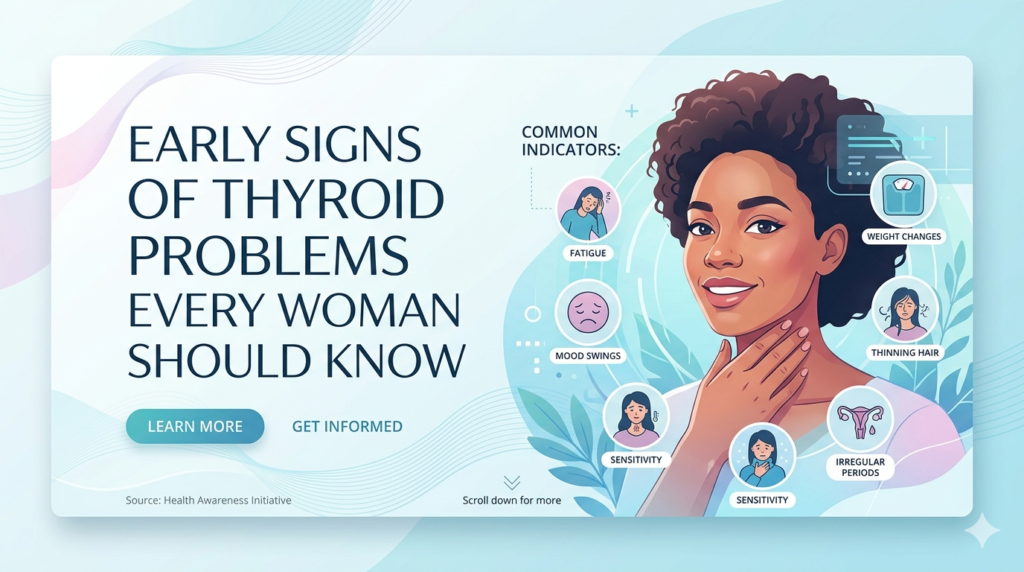
Thyroid disorders are becoming increasingly common among women due to lifestyle changes, stress, unhealthy eating habits, and hormonal fluctuations. Despite being a small gland, the thyroid plays a major role in maintaining metabolism, hormonal balance, energy levels, and overall body function.
Unfortunately, many women ignore the early signs of thyroid problems because the symptoms often develop slowly and resemble common health issues such as fatigue, stress, or weight changes.
Recognizing the early warning signs can help prevent serious complications and improve long-term women thyroid health. Early diagnosis and proper treatment can make thyroid disorders manageable and help women maintain a healthier lifestyle.
What is the Thyroid & Why It Matters
The thyroid is a small butterfly-shaped gland located in the front of the neck. It produces hormones that regulate several essential body functions.
The thyroid controls:
- Metabolism
- Heart rate
- Body temperature
- Energy levels
- Hormonal balance
- Brain function
Even a slight imbalance in thyroid hormones can affect multiple systems in the body.
There are two major thyroid conditions:
- Hypothyroidism – when the thyroid becomes underactive
- Hyperthyroidism – when the thyroid becomes overactive
Many thyroid symptoms women experience are often ignored during the early stages, which delays treatment.
 Related Blog:
Hormonal Imbalance Symptoms in Women & How to Fix Them
Early Signs of Thyroid Problems in Women
Understanding the early signs of thyroid problems is important for maintaining overall health and hormonal balance.
1. Unexplained Weight Changes
Sudden weight gain or unexpected weight loss without changes in diet or physical activity can be one of the earliest thyroid imbalance signs.
- Weight gain is commonly linked to hypothyroidism
- Weight loss may indicate hyperthyroidism
Thyroid hormones directly affect metabolism, which is why weight fluctuations are common thyroid symptoms women should not ignore.
2. Constant Fatigue
Feeling tired all the time, even after proper rest, can indicate thyroid dysfunction.
Common symptoms include:
- Low energy levels
- Weakness
- Difficulty concentrating
- Feeling exhausted throughout the day
Hypothyroidism symptoms often include slow metabolism and reduced energy production, while hyperthyroidism may disturb sleep patterns and cause fatigue.
Persistent tiredness is one of the most common early signs of thyroid problems.
3. Hair Thinning & Hair Loss
Hair health is strongly connected to hormonal balance.
Thyroid imbalance signs related to hair may include:
- Excessive hair fall
- Hair thinning
- Dry and brittle hair
- Slow hair growth
Women experiencing unexplained hair loss should consider thyroid testing, especially if other symptoms are also present.
4. Irregular Menstrual Cycles
The thyroid gland plays a major role in reproductive hormone regulation.
Thyroid symptoms women commonly experience include:
- Heavy periods
- Missed cycles
- Irregular menstruation
- Fertility problems
Hormonal imbalance caused by thyroid disorders can significantly affect menstrual health and reproductive wellness.
5. Mood Swings & Depression
Thyroid hormones also influence brain function and emotional health.
Women with thyroid disorders may experience:
- Anxiety
- Irritability
- Depression
- Mood swings
- Difficulty focusing
These emotional changes are often overlooked as stress-related problems, but they can actually be important thyroid imbalance signs.
6. Sensitivity to Temperature
Changes in body temperature tolerance can indicate thyroid dysfunction.
- Feeling unusually cold may suggest hypothyroidism
- Feeling excessively hot may indicate hyperthyroidism
Thyroid hormones regulate body temperature, making temperature sensitivity one of the common early signs of thyroid problems.
7. Dry Skin & Brittle Nails
Dry skin and weak nails are common hypothyroidism symptoms.
Women may notice:
- Rough or flaky skin
- Brittle nails
- Slow wound healing
- Pale skin texture
These symptoms occur because thyroid hormones affect skin cell regeneration and hydration levels.
8. Swelling in the Neck (Goiter)
An enlarged thyroid gland can cause visible swelling in the neck area, commonly known as a goiter.
A goiter may:
- Cause discomfort while swallowing
- Create visible neck swelling
- Indicate thyroid inflammation or imbalance
This is one of the most noticeable thyroid imbalance signs and should never be ignored.
Common Causes of Thyroid Problems
Several factors can contribute to thyroid disorders in women.
Iodine Deficiency
The thyroid requires iodine to produce hormones. Lack of iodine can lead to thyroid dysfunction.
Autoimmune Disorders
Conditions such as Hashimoto’s thyroiditis and Graves’ disease can affect thyroid function significantly.
Stress & Poor Lifestyle
Chronic stress, poor sleep, unhealthy eating habits, and lack of physical activity can negatively impact women thyroid health.
Hormonal Changes
Pregnancy, menopause, and hormonal fluctuations increase the risk of thyroid disorders in women.
Genetic Factors
A family history of thyroid disease increases the likelihood of developing thyroid problems.
Related Blog:
Best Foods for Thyroid Health in Women
How to Prevent Thyroid Problems
While some thyroid conditions are genetic, healthy lifestyle habits can help support thyroid function and reduce risks.
1. Maintain a Healthy Diet
Proper nutrition is essential for women thyroid health.
Include nutrients such as:
- Iodine
- Selenium
- Zinc
- Iron
- Vitamin D
Avoid excessive processed foods and maintain balanced eating habits.
2. Stay Physically Active
Regular exercise supports:
- Metabolism
- Hormonal balance
- Weight management
- Energy levels
Physical activity can also help reduce several hypothyroidism symptoms.
3. Manage Stress
Chronic stress can disrupt hormonal balance and worsen thyroid disorders.
Stress management techniques include:
- Meditation
- Yoga
- Deep breathing exercises
- Proper sleep
4. Regular Health Checkups
Routine thyroid testing helps detect problems early before symptoms become severe.
Women should monitor:
- TSH levels
- T3 & T4 hormones
- Overall hormonal health
5. Support with Supplements
Certain supplements may help support thyroid health when recommended by healthcare professionals.
Related Blog:
Best Supplements for Women’s Health & Hormonal Balance
When to See a Doctor
Women should consult a healthcare professional if they notice persistent thyroid symptoms women commonly experience.
Important warning signs include:
- Continuous fatigue
- Sudden weight changes
- Hair thinning or hair loss
- Irregular menstrual cycles
- Mood swings
- Neck swelling
Early diagnosis and treatment can help prevent complications and improve long-term health outcomes.
Conclusion
Thyroid disorders can affect almost every aspect of a woman’s physical and emotional health. Unfortunately, many women ignore the early signs of thyroid problems until symptoms become severe.
Understanding thyroid symptoms women commonly experience can help with early diagnosis and better treatment outcomes.
By maintaining a healthy lifestyle, managing stress, and getting regular health checkups, women can improve Women thyroid health and reduce the risk of long-term complications.
Recognizing thyroid imbalance signs early is one of the best ways to protect your hormonal health and overall well-being.